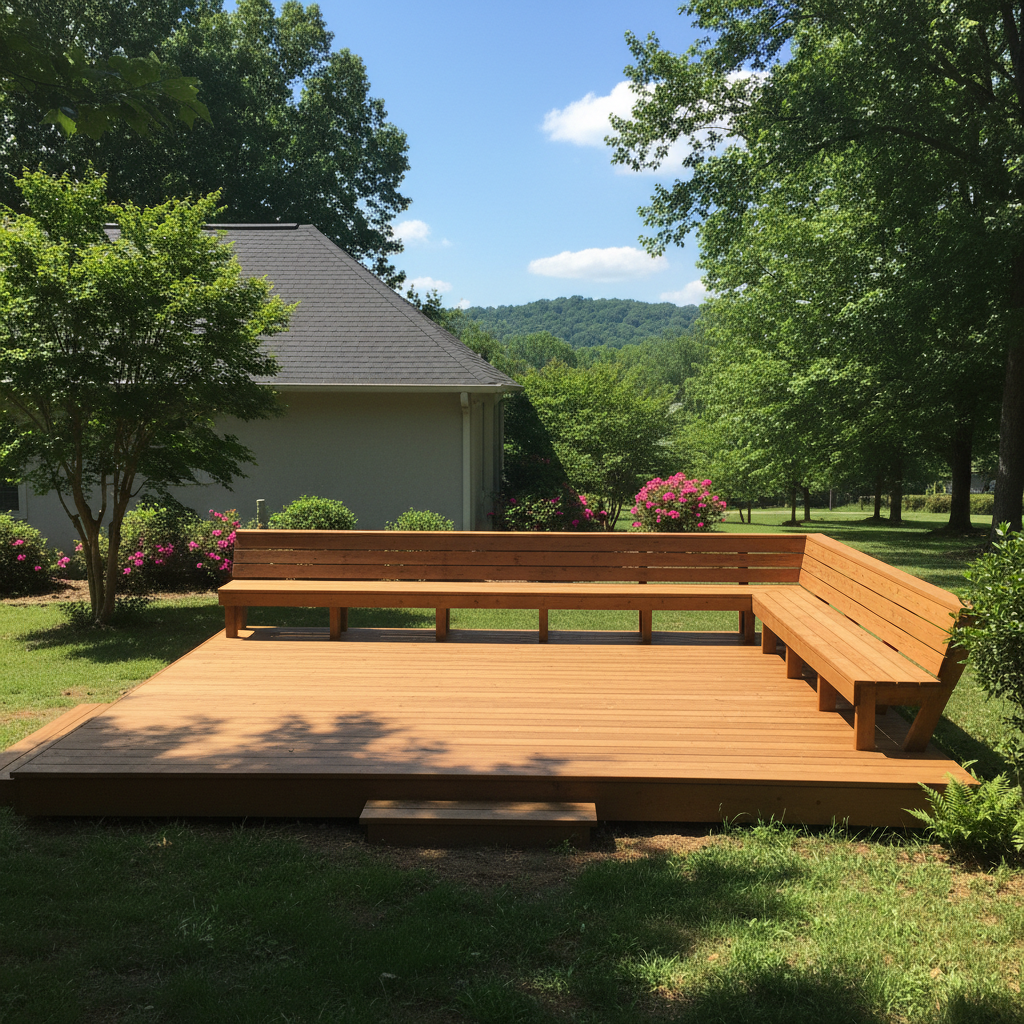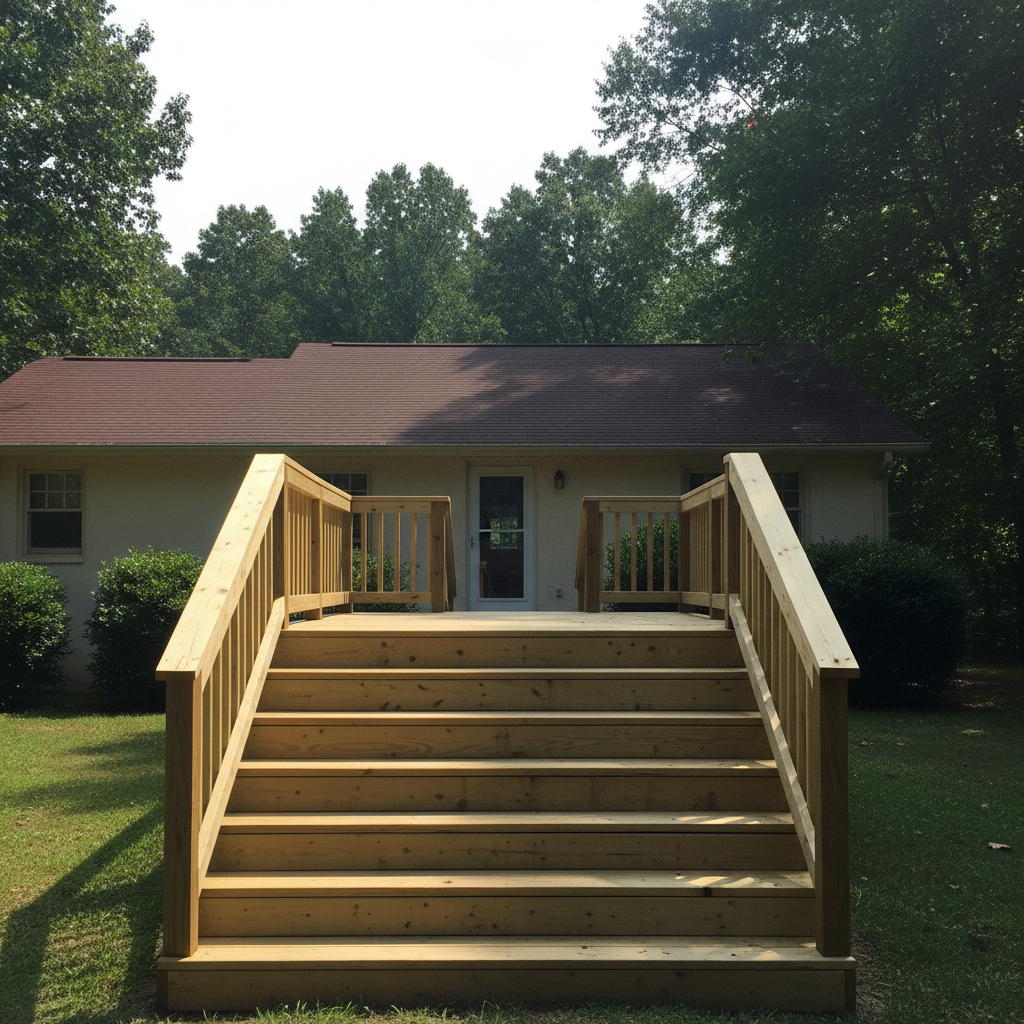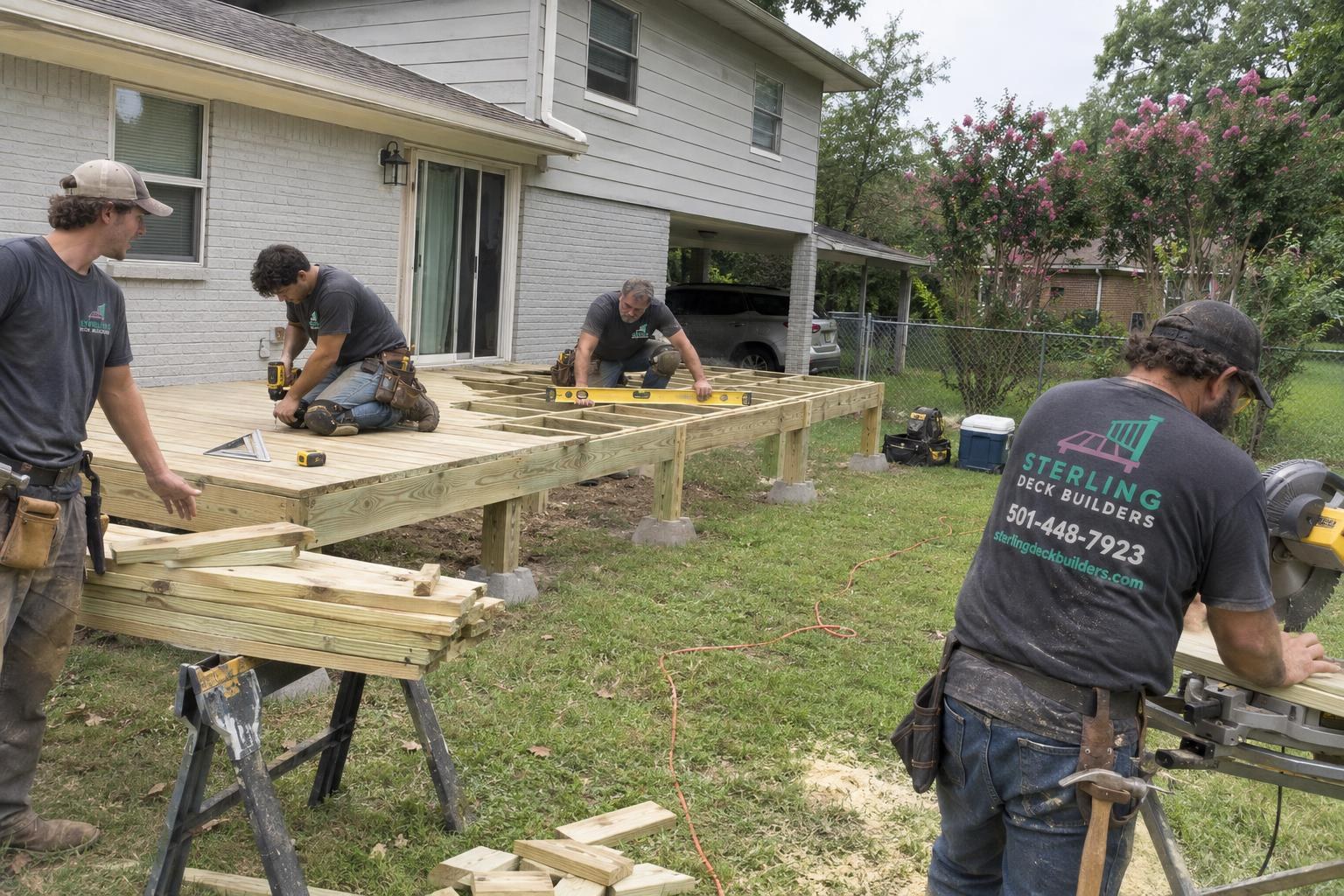
We started out doing general carpentry and framing, and decks became the thing we kept getting asked to do, probably because most deck work in this area is done badly and homeowners notice. Now it's most of what we build: new decks, replacement decking, and the repairs that come from a deck nobody maintained for ten years. We work on everything from a small platform off a back door to a two-level deck built onto a slope.
The problem we see most is rot at the ledger board, the piece bolted to the house that the whole deck hangs from, because it was never flashed and water's been running behind it for years. We pull the old ledger, flash it properly with self-adhered membrane, and bolt it back with lag bolts rated for the load, not nails. We also see joists sized off a chart for a smaller deck than the one actually built, which is why some decks bounce when three people stand on them. We check the span tables against your actual layout before we frame anything.
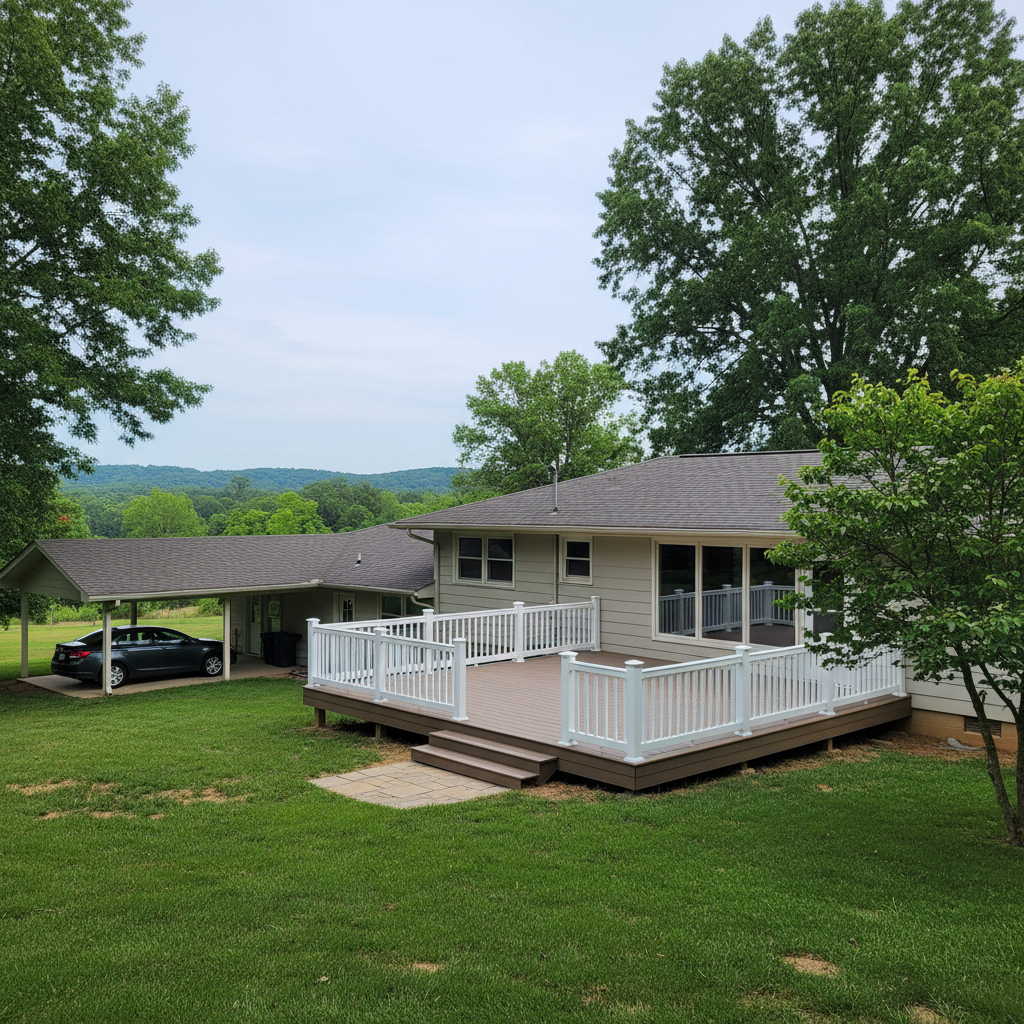
None of this is complicated. It is mostly just doing what we said we would do.
You're covered if a tool gets dropped on the siding or a ladder dings the gutter, not just hoping nothing happens. Ask for a certificate of insurance before any work starts, we'll hand it over.
Arkansas building code sets a 36 inch minimum railing height and a 4 inch max gap between balusters, and inspectors check it. We handle the permit paperwork so you're not the one standing in line at the county office.
Deck demolition throws off a lot of splintered wood and bent nails, and that stuff ends up in bare feet if it's left in the grass. We bag the hardware and haul the lumber the same day we tear it out.
The quote names the lumber species, the fastener type, and the footing depth, so you know what you're paying for. No verbal estimate that turns into a different number on the invoice.
We don't hand the job off to a sub halfway through so a different set of hands is cutting your stair stringers. The same people who dig the footings are the ones setting the final board.
Central Arkansas clay expands and contracts enough to heave a shallow footing within a couple of winters. We dig and pour to depth because we've seen what happens when someone doesn't.
Questions about us specifically, not the work itself.
Free estimate, a price in writing, and work we stand behind.